Tag Archives: celiac disease

Meet Celia: A Gluten-Free American Girl

Last week, we took a look inside the lunch box of a modern American Girl doll. There were sandwich skewers. The times, they are a’changin’—why, the only accessory my Samantha doll had was a comb.

The accessories aren’t all that have kept pace with our modern era. The books have, too. They used to focus on the historical American Girls and followed a great six-book formula: we meet the protagonist, she learns new things about herself and the world, she overcomes obstacles, she comes out of it a changed and better person. All between the ages of nine and eleven.

American Girl TodayThese days, they publish under the series American Girl Today. There are fewer books for each girl, and they have modern names like Nicki and McKenna. They pose against technicolor backgrounds doing modern-girl things like gymnastics.

I don’t mean to knock the new books—I haven’t even read them. But they did have a good thing going with the old series. In honor of the beloved classic formula, I hereby introduce to you a new American Girl. Like more and more girls (and boys) today, our heroine must eat gluten-free. I’ve dubbed her, for obvious reasons, Celia.

This is her story.

Meet Celia: An American Girl

Celia awakens on a hospital cart, still groggy from the sedative, and is told, “We think you have it.” A week later, it’s confirmed: she has celiac disease. Her life will irrevocably change. It is a sad beginning.

Celia Learns a Lesson: A School Story

The moral of this one is: never trust the hot lunch. Celia is glutened again and again until she finally agrees to start brown-bagging it.

Celia’s Surprise: A Christmas Story

At her first gluten-free Christmas, Celia is shocked by the beany aftertaste in the sugar cookies her mother has prepared, but pleasantly surprised to learn that most candy canes are gluten-free.

Happy Birthday, Celia!: A Springtime Story

In which Celia learns that she probably only has this stupid disease in the first place because she was born in the springtime. However, her King Arthur Flour GF birthday cake (like mine!) is pretty tasty.

Celia Saves The Day: A Summer Story

Celia can’t eat what the other girls are having in the camp mess hall, and when they make pasta necklaces she feels understandably left out. Still, it turns out to be worth it when, uninflamed and energized, she joins her tentmates for the end-of-summer relay race. At the finish line, she raises the baton in victory.

Changes for Celia: A Winter Story

Despite the chilly weather, Celia begins to feel awfully thirsty all the time, even while consuming jugs and jugs of water. She also seems to be peeing it all out every twenty-five minutes. After dropping an unneeded fifteen pounds, Celia visits the doctor and learns there will be changes indeed: like 5 to 10 percent of her celiac peers, she has type I diabetes. She’ll need to not only avoid gluten but also learn the ups and downs of managing her blood sugar. She’s a positive little thing, though, with a pioneering American spirit, so to her it’s all just another exciting challenge.

Do you admire Celia’s unremitting pluck, or do you sorta hate her for it?

I’m on the fence. I don’t think I have diabetes, per se, but after reading Celiac Disease: A Hidden Epidemic (which claims that the likelihood of having an associated autoimmune disease rises to 30 percent for those diagnosed after the age of 20…gulp), I’ve begun my fretting in earnest. If I do turn out to have something else on top of celiac disease, I won’t be taking the news cheerfully.

American Girl logo (with Molly)

You’ll note I didn’t place Celia in a particular historical moment like her peers, colonial Felicity or Victorian Samantha. Those historical dolls are now being laid to rest, one by one, along with their accessories, in the “archives” (though the books, fortunately, will remain in print). Samantha, my favorite (and many of yours), was “retired” in 2008, and it was recently announced that Molly will be next.

We must accept that the past is past, unsaleable to the girls of today. We must look forward to new American Girls who better resemble the girls of today and tomorrow.

Celia lives at a time when celiac disease is better understood and more researched, but still diagnosed late, with attending complications, and incurable except by means of a lifelong diet whose cred is being rapidly eroded by claims about “fads.” In short, she lives today. We can only hope that one day, with celiac and other autoimmune diseases vaccinated into oblivion, Celia too will be rendered a historical figure, hopelessly out of date, a relic fit only for the archive.

What are your summer, spring, and winter celiac stories? What changes and surprises have you encountered (birthday or otherwise)? Do you have other autoimmune diseases and were you diagnosed before or after learning you had celiac? Have you come across any great new celiac-disease-themed kids’ books recently?

P.S. There’s still time to enter my giveaway (it runs through Tuesday) by taking the celiac disease personality quiz and reporting your score. Check it out this weekend, if you aren’t spending it at the GFAF Expo. If you are, see you there!

Tagged , , , , , , , , , , ,

What do you say to celiac disease ignorance?

Do you speak up when someone says something incorrect about gluten sensitivity or celiac disease? (This, by the way, could almost be a question on my celiac disease personality quiz. If you haven’t yet, try it and let me know your result for a chance to win free tickets to or a swag bag from the New York/New Jersey GFAF Expo.)

I generally do. I don’t like the idea of untruths being spread, and I feel party to it if I hold my tongue, especially when I have a personal connection to the subject.

Sometimes, I’m the one who turns out to be wrong. Case in point: last night, I learned that my parents mash their potatoes with an electric mixer, not by hand, as I had been vehemently insisting to my sister. But even then, I don’t usually regret speaking my mind. A little friendly debate is fun.

mashing potatoes with electric mixer

I still think it’s better to hand-mash. Sorry, Mom and Dad.
Photo © Robyn Anderson | Flickr

However, when the other person also feels personally connected to the subject, and isn’t my sister, and we aren’t discussing culinary technique, things can get sticky. A Google search isn’t always sufficient evidence to win such debates, which may escalate into real confrontations.

So, under such circumstances, I sometimes just back off. For example:

Scenario #1: The Fellow Patient

A few months ago, in the waiting room at my doctor’s office, I got to talking with an older gentleman who had been diagnosed for some time.

When I asked how he felt, he shook his head. “Still sick,” he said. “I think I have a parasite.”

I was sympathetic. “I’m not feeling better yet, either.”

“And you’re sticking to the diet 100 percent?” he asked.

“Of course,” I replied.

“You don’t eat out?”

“No,” I replied.

100 percent?” he repeated.

“Yes,” I assured him. “100 percent.”

“Wow,” he said. “I don’t. It’s too hard.”

Seriously?

I wanted to say, “Huh. Maybe you don’t feel sick because you have a parasite. Maybe you just aren’t doing the one thing that is known to cure the disease you have.”

But I hardly knew the guy, and he was many years my elder. Plus, he was about to go in to see the doctor and, hopefully, be told the same thing by her (with better bedside manner).

I might have looked surprised, but otherwise, I kept my thoughts to myself. When I stood, I told him to get well soon.

*

Scenario #2: The Family Member of a Patient

At a barbecue to which I had dutifully brought my own gluten-free three-bean salad, I started talking to some of the other attendees about celiac disease.

One of them said, “My aunt had that…”

I nodded.

“…but she grew out of it,” my interlocutor concluded.

My nod turned sideways. “That’s not actually possible,” I said, slowly.

“Yes, it is. She was gluten-free when she was a baby but now she doesn’t have it anymore.”

“I’m pretty sure you can’t grow out of it…” (By now, I’d already lost: in order to maintain appropriate backyard conversational levity, I was qualifying my response, playing nice, pretending I didn’t know beyond a shadow of a doubt that you can’t “grow out of it.”)

“Yes, you can.” She was as vehement as though we were discussing her own GI tract. “She did.”

I argued a bit more, then shrugged. “Okay,” I acquiesced. “Maybe you’re right.”

I let the conversation turn to other things. I ate my salad.

I moved on.

But did I really? Clearly I’m still thinking about it—about both of the conversations, wondering if I should have spoken up. Maybe I could have dammed one small stream of misinformation, if only I had thought of the right thing to say.

Instead, I reverted to a certain mode of sociability, one I’m not even particularly fond of, whose principles are:

  1. one doesn’t act like a know-it-all
  2. one doesn’t harangue one’s conversation partners
  3. one doesn’t call another’s bluff.

Was this cowardice on my part? Laziness? Did standing aside make me an accessory to the “crime” of spreading ignorance?

Or was it appropriate to just let it go? Am I, after all, responsible for educating people? Even people who aren’t prepared to accept my advice? Don’t I reflect better on myself and the general celiac population by not beating people over the head with my supposed superior knowledge? Don’t I seem less uptight, less nitpicky, less of all those undesirable qualities with which we are too often associated?

I don’t know. I’ve thought about it and thought about it, and, for once, I just don’t know.

What would you have said in these situations? Have you had similar experiences? How did you respond? 

Tagged , , , , , , , , , ,

A hit list and a wish list: who deserves celiac disease?

People I wish had celiac disease:

  • Hitler: Obviously.
  • Stalin: Also obvious.
  • Saddam Hussein: You get the point.
  • J.K. Rowling*: Because she’d write an instantly best-selling inspirational children’s book series about overcoming celiac disease through the magic of love and friendship. And she’d totally want me for a coauthor.
  • Ancient Buddhist monks*: Because then they would not have invented seitan, and I would not have to feel sad I can’t eat it.
  • Cookie monster with fruitUS Farm Bill writers*: Because they would stop subsidizing wheat. (And produce more…corn? Hang on a second.)
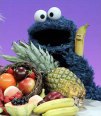
  • The Cookie Monster: Because it’d be great for awareness.
  • Lady Gaga*: Because she flirts with G-free already, and any way I can be more like Lady Gaga sounds good to me.

People I’m glad don’t have celiac disease:

  • My mom: Because recipe reformulation or not, I’d hate to see her lose her Twizzlers.
  • My brother: Because I’m not sure what he’d do without pizzapastasandwiches.
  • The rest of my family: Well, assuming it’s true, that is. GET TESTED.
  • Most children: Everyone should have at least 20 years of animal-cracker-gumming, Triscuit-crunching, beer-chugging bliss (sorry, I meant 21 years). If they get it later…well…we all have our cross to bear.*
  • BooksBooks_How_To_Cook_Everything-S&SMark Bittman: Because socca seems even cooler when its chief proponent isn’t forced to eat chickpea flour. And because there’s just not as much of a ring to How to Cook Everything Except Wheat, Rye, Barley, and Anything That Might Have Ever Touched One of Those Things.
  • 132 out of 133 people: Good for them.

People I wish did not have celiac disease:

  • Me: Because it sucks.
  • My sister: Because she misses beer, and I feel responsible.
  • You: Because you’re awesome, and it’s not. I hope you would still read my blog, though.

People I’m glad have celiac disease:

  • No one.

*I don’t really wish celiac disease on anyone besides the evil dudes. And the Cookie Monster, because he’s fictional and it would be hilarious.

Who’s on your lists? I know you’ve got ’em.

Tagged , , , , , , , , , , ,

Sprue Stories: The Disney Edition

We already know how Beauty and the Beast would go if Belle had celiac disease, but what about all the other Disney characters? We may not have a food-allergic or intolerant Disney princess yet, but that doesn’t mean we can’t pretend. After all, as Walt would say, “If you can dream it, you can do it.” As long as “it” isn’t “eat gluten.”

Check out my versions of the classics, then tell me yours!

Mickey_Logo

Simba just can’t wait to be king, when he can outlaw offering “just a bite” to people with celiac disease and, for that matter, ban gluten entirely. He’s got it all planned out: “No one sayin’ try this, no one sayin’ eat here; no one bakin’ rye bread, no one brewin’ wheat beer!” Oh, he just can’t wait to be king.

Mickey_Logo

The Lady didn’t find that shared strand of spaghetti quite so romantic when, an hour later, her typical glutening symptoms started up in full force. “I should have known it wasn’t really made of quinoa,” she raged at the repentant Tramp. “Footloose and collar-free, my tail.” She never trusted a date to pick the restaurant ever again.

Mickey_Logo

When Gaston was a lad he ate four dozen eggs every morning to help him get large. When this admittedly excessive regimen failed to produce the desired result, his doctor determined he was in fact egg intolerant. So now that he’s grown, he eats five dozen bowls of oatmeal instead, and it seems to be working for him because he’s roughly the size of a barge.

Mickey_Logo

Ursula, that old sea witch, knew just what she was doing when she struck her bargain with the mermaid. “I’ll make you human for three days,” she crooned, “and if the prince gives you a kiss, you’ll be human forever. If not, you’ll belong to me. I ask just one thing in exchange…your gluten.” Persuaded that giving up gluten for three days couldn’t be that hard, Ariel agreed. But when she found that Ursula’s minions were plying the prince with the bread and cupcakes she’d forsaken, Ariel realized the catch: if she kissed the gluten-eating prince, she wouldn’t herself be gluten-free. When the sun set on the third day with her end of the bargain unfulfilled, Ariel lost her legs, her prince, and her freedom—but at least she regained her gluten.

Mickey_Logo

Aladdin finally realized that those loaves of bread he kept stealing from the market weren’t doing him any good. And not just in the criminal record department, if you know what I mean. But when he asked his magical friend for help, Genie wrung his big blue hands and said, “Sorry, pal, even I can’t help you with that. Celiac disease is incurable, you know.”

Mickey_Logo

Cruella was gung-ho about collecting the Dalmatians’ coats for her own—until their fur began falling out, that is. Then she lost interest and set them free. Little did she know it was caused by malnutrition from gluten sensitivity and could have been easily solved by switching kibble brands. When the pups found their way home—all 101 of them—their story was picked up by news and talk shows across the country. A successful online fundraising and awareness campaign paid for their new, more expensive dog food and, as a bonus, sought out and brought to justice Ms. de Vil, who had since moved on to terrorizing animals with better functioning immune systems.

Mickey_Logo

None of those sorry excuses for men could manage to shimmy up the climbing pole, much less fight off a horde of Huns. But when Mulan cut wheat out of her diet, her brittle bones recovered and her energy soared—as did she, right up to the top of that pole. These days she’s such a changed man—er, woman—that when she looks in the mirror she still can’t recognize her reflection.

Mickey_Logo

Once the celiac disease epidemic had reached epic proportions, human beings fled the planet, leaving behind only a few robots to scour away every trace of wheat, barley, and rye that remained. They planned to return one day, but with their newly healed digestive systems absorbing nutrients aplenty, they quickly became fat and complacent. And why risk the cross-contamination? Years later, just one lonely robot remains, diligently uprooting stalks of wheat. But the real story begins when Wall-E starts exhibiting signs of gluten sensitivity, too…

Mickey_Logo

Do you have a new ending for Wall-E or a gluten-free or food-allergy/intolerance spin on The Jungle Book, Ratatouille, or another one? Who’s your favorite Disney hero(ine)/villain? Let me know in the comments!

Photo © Brian Jackson | Flickr

Where (some) dreams come true
Photo © Brian Jackson | Flickr

Pssssst…If you liked this post, check out the fairy tale edition, too.

Tagged , , , , , , , , ,
Design a site like this with WordPress.com
Get started