Tag Archives: doctors

Why don’t doctors just talk to each other?

You know that old conversation starter/essay prompt, “If you had to pick five people, famous or not, dead or alive, real or imaginary, to invite to a dinner party, who would you choose?”

There are variations with different numbers and types of people, but the question’s basic thrust, I think, always comes down to a mix of “Who do you most want to talk to?” and “Who do you most want to talk to each other?” In other words, what combination of people in all the world and all of history do you feel would produce the most interesting dialogue?

This question was an option for my college admissions essay. I didn’t choose it, probably because I feared my taste in famous and historical companions would not pass muster. I’m still not sure it would, even after my four years of cultural grooming.

But lately I’ve been thinking about it again, not so much in terms of a fantastic philosophical discussion I could arrange, but in terms of a conversation I could trigger that would have immense utility for me personally. What if, a couple years ago, I’d thrown a dinner party for all of my different doctors—my old general practitioner, the emergency room doc I saw one time, the gastroenterologist who prescribed OTC medication, the ob-gyn, the dentist—and proposed the conversation starter “Diagnose Molly”? (Personal health makes for great dinner conversation.)

Could they have done it? Could they have laid out all my different symptoms on the table and connected the dots, instead of each focusing myopically on a different piece of my health? Or would they refuse to talk to each other, kick each other under the table, pick at their meals? Would the GP look down on the GI doc and the emergency room doc fixate on his beeper and the dentist drift into fantasies of his future yacht?

Maybe they’d manage it if I threw a celiac disease expert in there. Or gave them access to WebMD.

Wouldn’t it be nice, though, if instead of a splintered, segmented health care system, we had doctors who spoke to one another? Of course, doctors have so many other patients to deal with that they would never have time for a little conference focused just on me.

But what if they . . . you know . . . shared their records with one another in an organized way, using the advanced technology we have available for preserving and sharing information? Might that not have helped? Might the pieces not have come together faster?

Is that such a fantasy? Is it science fiction? If you ask me, it shouldn’t be.

I’m off to Washington, DC, today to visit my brother and see some cherry blossoms. Have a nice weekend, and tell me who you’d invite to a dinner party if you could pick any five people.

Tagged , , , , , , , ,

Happy hump day!

Photo © blue_quartz | Flickr

Photo © blue_quartz | Flickr

Wednesdays after a vacation are so much harder than other Wednesdays. I had a great visit with my parents last week, then hosted my sister over the weekend, and then had a half day yesterday because of my doctor’s appointment. All of this means I should be well rested and bright-eyed as I tackle the rest of my week, but instead, I’m dragging. (I blame my lack of nutrient absorption; what’s your excuse?)

To keep my enthusiasm up, I’m focusing on a few small pre-hump triumphs:

1. I had my first dinner party since going gluten-free. Hello, amaranth-polenta-stuffed peppers! Did you know amaranth is rich in, like, everything holy? Protein (including lysine), fiber, magnesium, iron, zinc, calcium, B vitamins…all that stuff veg-heads and gluten-freebies crave. I am not the first to compare it to manna. I’m eating my way through the leftovers and still have half a package left to use in another recipe. Thanks again, Mom, Dad, and Bob!

2. I made the Bob’s Red Mill brownies for my writing workshop and they were widely agreed to be delicious (by the same pals who said terrible, terrible things about the chocolate chip cookies). I filled them with about three times the recommended amount of chocolate chips (1/4 cup? Really?) and frosted them with Betty Crocker fudgy chocolate frosting (a bit sacrilegious for a girl whose parents would always opt for homemade ganache, but hey, they’re the ones who bought me a baking mix). They were even better the next day after chilling out in the fridge. Thanks, everyone, for recommending the brownies.

3. My new doctor is great. She listened to my concerns, she ordered a few more tests, she reassured me that everything takes time. She also felt my ankles and said, “You really run a lot, don’t you?” I have no idea if those two things were connected, but it amused me.

4. While at the doctor’s, I picked up a copy of the latest edition of Columbia’s Ultimate Guide to Gluten-Free Living (the linked edition is not the most recent, but I’m not sure the 2012 printing edition can be found online). It’s pocket-sized (if you are a man—if you’re a woman, you know the only thing pocket-sized is lip balm) and packed full of goodies. I read a lot of books, articles, and blogs about celiac disease and gluten-free living and often find the same information over and over again, but the little kernels of new knowledge make it worthwhile. This book lists a whole bunch of gluten-free brands I can check out and also highlighted Montina (Indian ricegrass), which is a new grain on me. I think it’s similar to Kamut (not gluten-free), in that the name is a registered trademark and it seems to be produced by one company only. On a less happy note, it also seems tough to find. Anyone tried it or know where to buy it?

5. I also found it adorable that the guide included the misspelling xantham gumSeriously, it’s so much cuter that way.

6. Plus, it included one of those dining cards you are supposed to give to baffled waiters at restaurants. Do you carry one of these? I’m hoping I won’t mistake it for a business card—not that I give out many of those anyway.

7. Finally, when I pulled out the book I triggered an awkward but pleasant subway interaction with the guy sitting next to me. He told me he has a friend who needs to eat gluten-free, and I mentioned I was vegetarian as well, so we talked about soy. It was the first time I have ever heard someone say the word phthalate out loud. I looked back down at the book after a bit and he got up at the next stop, whether because it was actually his stop or because I made him feel unwelcome, I do not know. I hope it was the former. Although I don’t handle stranger banter all that well, I do love these chats because they remind me that the other people on the train are real people with interiority, not strange cyborg commuting machines, which also reminds me that I too am real.

What’s helping you remember you’re real this Wednesday? (Lots and lots of coffee? Oh, me too. Me, too.)

Tagged , , , , , , , , , , , ,

Remember you are not the doctor.

Photo © Josh Clark | Flickr Creative Commons

Photo © Josh Clark | Flickr Creative Commons

Doctors’ receptionists have a tough job. They deal with stressed, unhappy, contagious people all day, and when they aren’t doing that, they file and photocopy paperwork, deal with ancient fax machines, and, I bet, put up with crap from the doctors. I’ve read that some offices don’t even provide their front-desk staff with internet access—which, to me, is practically a human rights violation. They probably get ill constantly from all the germs, and when they aren’t physically sick, they’re sick of their job.

Knowing this, I try not to be one of “those” patients. I’d say I’m pretty friendly, and I know I’m polite. In return, I hope for civility and, ideally, a bit of compassion. In my most recent medical experiences, I’ve encountered neither. My doctor never called me with my positive bloodwork results, and when I scheduled a follow-up, he and his staff forgot to check my results until I asked about them specifically. They were brusque and unapologetic and they sent me a duplicate copay bill.

When the time came to get my biopsy results, I didn’t want to go in and do it all over again (not to mention pay another copay or two). Instead, I tried to find everything out over the phone, and it got messy. In the end, the receptionist got fed up with me and said, “Remember, ma’am, you are not the doctor.”

This stuck with me, and not only because I found it funny that she called little ole 23-year-old me ma’am. It was also simply good advice. As I gear up for my first appointment with a brand-new doctor, I thought I’d share it. If you are a doctor, this may not apply to you. But otherwise:

Remember you are not the doctor.

Remember you do not have the doctor’s medical training, or credentials. Remember that to many, your understanding of your own health will never count. Remember you are presumed ignorant. Remember if you speculate or self-diagnose, you will be accused of hypochondria. Remember that not everything you’ve read or heard is true. Remember you may be biased, and remember fear can cloud your judgment.

But also: Remember it’s okay to be scared.

Remember to stay calm. Remember you care more about your health than anyone could who is paid to do so. Remember you have spent many recent hours researching your symptoms, and that if your doctor hasn’t kept up with latest research, you may in fact be better informed. Remember you are open to new ideas. Remember you do not have hundreds of other patients to keep track of. Remember you are focused. Remember you are the world’s leading expert on your own medical history and feelings.

Remember you are you.

Remember it is you, and not your doctor, who must live with whatever treatment—or lack of treatment—you’re prescribed. Remember you can seek a second opinion, or a third, or a tenth. Remember instinct counts for something, too. Remember it is easier for you to walk out on your doctor than for your doctor to walk out on you. Remember you’re worth more than a copay. Remember there are people rooting for you or relying on you to get well. Remember you are your own best advocate, but you are not your only advocate.

Remember you are loved.

Remember you are smart, and strong, and beautiful, and kind, and worthy, and interesting, and special, and whatever else you need to remind yourself of before you walk into the waiting room for your next appointment; but for God’s sake, remember you are not the doctor.

And remember you’re important anyway.

Tagged , , , , , , , , , , ,

Man vs. machine: Who will win the title of Dr. Right?

I’ve got doctors on the brain recently, probably because I’ll be seeing a new one next week. I get excited about a new doctor almost the way some people anticipate a first date. Will I like her? Will she “get” me? Will she at least be better than the last loser? Might she—dare I dream she could be the One? The doctor I’ll want to commit to forever, in sickness and in health?

I am hoping this new doc will work out. But lately I’ve wondered if I’ve been looking for care in all the wrong places. What if the doctor for me isn’t like those others I’ve known? What if my Dr. Right isn’t even human? That’s right—I’m talking about Watson.
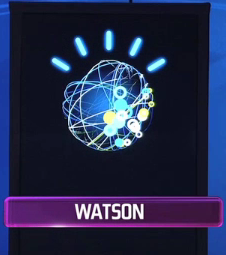
watsonjeopardyAccording to an article in the Atlantic, a future in which computers process symptoms, test, diagnose, prescribe, and even perform surgery is no idle daydream. Picture this: you walk into your doctor’s office and he/she sits in front of you with a laptop or tablet, typing in your symptoms (or recording them via voice recognition technology), and then you both wait as the system crunches the data and spits out a list of potential diagnoses and tests to be ordered. Or, maybe, the symptom-listing step is bypassed entirely, because you’ve already been walking around with sensors in your clothing or on your smartphone that have been feeding information about your bodily processes directly into the system, leaving you to fill in only the less quantifiable information—the psychological stuff, perhaps, if they haven’t found a way to quantify it yet. The doctor, in this scenario, wouldn’t be much more than an accessory to the work of the computer.

Personally, I’m intrigued. I’d love to know that my symptoms were being recorded in a database longer lasting than my memory or a doctor’s poorly executed scrawl on a clipboard (it’s mind-boggling to me how backwards and unsystematic our current electronic medical records are). I also appreciate the idea of my symptoms being systematically investigated for patterns, without ignorance or biases clouding the picture. Research is moving too quickly and medical practices are too overbooked for doctors to be able to keep up with the volume of new knowledge or prioritize it appropriately. A computer, properly “trained,” perhaps could.

The Atlantic article references a TechCrunch article from 2012, in which writer Vinod Khosla writes compellingly about “Dr. Algorithm” eventually replacing 80 percent of physicians, with the remaining 20 percent continuing to make themselves redundant by helping the computers improve at diagnosing illness. The Atlantic article characterizes doctors’ response to this prediction as “skepticism, derision, and anger.”

I’m sympathetic. Since I work in book publishing, you might say that I’m living in a glass house when it comes to throwing technological stones. After all, people love to claim that publishing houses are on their way out. Why work with a publisher when you can use CreateSpace? Who needs a publicist when there’s Twitter? Why bother with an editor when you can just turn on spell check?

From my perspective in the publishing industry, I see the oversimplifications implicit in these questions. I know that editors do more than check spelling, and I don’t think that what they do do—isolate and clarify ideas, improve upon the readability, accuracy, and quality of writing, and push authors to consider cuts or additions that would not occur to them, given their proximity to the material—will be made redundant anytime soon. Beyond that, anyone who self-publishes must face the difficulties of designing a beautiful cover and interior, working out the intricacies of metadata and ebook distribution through multiple channels and formats, and finding the time for the kind of promotion that allows a book to sell more than a hundred copies or so. People in publishing have developed expertise in these things and do them on a daily basis. It’s hard to say exactly which traditional publishing professions will still be in play ten or fifty years from now and how the industry as a whole will look, but I do feel safe predicting that it won’t be dead yet.

Similarly, I think it would be oversimplifying to ask, “Who needs doctors when we have WebMD?” WebMD is a fantastic tool, and more sophisticated systems like Watson offer even wilder possibilities. Still, as the Atlantic goes on to note, doctors “do more than process data. They attend at patients’ bedsides and counsel families. They grasp nuance and learn to master uncertainty. For their part, the innovators at IBM make a point of presenting Watson as a tool that can help health-care professionals, rather than replace them.”

Doctors—those mystical good ones, anyway—provide something a computer cannot: connection on a human level. A real, warm hand to hold in trying times, a shoulder to lean on, a compassionate face, a soothing tone. Will we see doctors become, essentially, medical counselors? Will, perhaps, the top 20 percent go on diagnosing alongside the computers, while the rest simply provide the “human” care they’re currently too busy to give?

I must admit, I scoffed a bit at this idea. My mind went to a recent NYT Well blog post about “failing” medical students, which discusses a certain student who couldn’t handle the pressure of working with patients but “did extremely well on all her tests,” so her professor found it difficult to fail her. The prof claimed there were “no multiple choice exams when it comes to things like clinical intuition, communication skills and bedside manner.” Many commenters on this post pointed out that medical schools prioritize the memorization of data for standardized tests over the teaching of those “soft skills” that the Atlantic article suggests may be doctors’ most critical contribution in the future.

On a personal note, I’ve had terrible doctors when it comes to soft skills. They were uninterested in communicating with me, they were too harried for empathy, and as for providing a shoulder to lean on, they may as well have worn barbed-wire epaulettes. Their “hard” skills weren’t stellar, either—they couldn’t seem to cobble my symptoms together into a diagnosis, and they all had their own pet distractions: one harped on fiber, one was big into prescriptions, and one always managed to turn the conversation back toward ear wax. I’ve never felt confident in my doctors’ ability to help me, and in the end, like many people, I had to ask to be tested for celiac disease (and then ask—beg, really—for my test results, too). Would these doctors improve if they had more time to relax and speak with their patients, or would they just become even more useless? I don’t know for sure, but faced with docs like mine, I’m ready for the robot revolution.

But I do have one friend in med school who talks a lot about her doctor-to-patient training as though it’s the part of school that interests her most: the part in which students role-play difficult conversations about health or meet real patients to learn about their medical history. My friend is smart, too, and if she retains her interest in interacting with patients and doesn’t get burnt out by school, she just might be the face of the future of medical care. If the doctor I’m about to meet is anything like this friend, I’ll feel like I’m in good hands—though that doesn’t mean I’ll stop doodling Watson’s name in the margins of my notebook anytime soon.

How do you feel about the idea of robots taking over the stethoscope? Heady daydream, or science-fiction nightmare?

Tagged , , , , , , , , , , , ,
Design a site like this with WordPress.com
Get started