Category Archives: Reviewing the Literature

A label-reading lesson from Hogwarts

3I’m here again to remind you that more than magic runs in the blood of J. K. Rowling’s wizarding folks. We talked about Moaning Myrtle last time, but let’s not forget our other prime celiac/allergy role model in Harrypotterland: Mad-Eye Moody.

This is a man who:

  • drinks from a personal flask rather than risking the dining hall pumpkin juice
  • drags around a magical trunk with seven locked compartments, one of which must be stuffed with Udi’s
  • has one magical eye that I’d wager can detect gluten down to 0 ppm
  • isn’t a stranger to skin issues
    . . . or mental issues
  • and, most importantly, knows the value of CONSTANT VIGILANCE.

All signs point to celiac.

Paranoia, double and triple checking, and intense suspicion of even the most innocuous-seeming thing may all be symptoms of paranoid personality disorder, but they’re also critical aspects of living free of gluten or food allergies. This past week, I learned anew the value of CONSTANT VIGILANCE after two separate sloppy errors:

  1. A few days ago, I bought a bag of salt & pepper pistachios from CVS. After eating a handful, I grabbed the bag in a panic to double check the ingredients, as I am wont to do, but this time, rather than resting easy that my first look was enough, I realized that though the optional “may contain” line didn’t list wheat, there were natural ingredients that I hadn’t queried. When I called Gold Emblem (the CVS grocery brand), a representative confirmed the pistachios were gluten-free. Still, I should know better than to eat it before I read it.
  2. Last night, I finished off a bag of popcorn kernels from Arrowhead Mills. Because I’ve been researching pure gluten-free dried beans recently without a ton of luck, it occurred to me to recheck this bag. Sure enough, no “gluten-free” symbol, which Arrowhead states it includes on products made on dedicated lines. I’ve eaten the popcorn over the course of months, simply assuming I must have done my research properly before I bought it. Apparently not. I have to wait till 9 to call their customer service line, but I’m kicking myself already.

If Mad-Eye were here, I know he’d be grumbling, “Elementary food safety, nobody bothers about it anymore.” I know, I know, Professor. Put me in detention, take points from Ravenclaw, but please, don’t let my popcorn have had gluten in it.
Tagged , , , , , , , , , ,

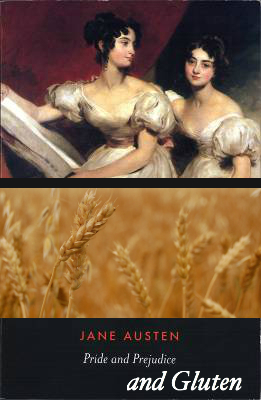
Pride and Prejudice and Gluten

It is a truth universally acknowledged, that a celiac man in possession of a good fortune, must be in want of a wife.

However little known the appetite or baking ability of such a man may be on his first entering a neighbourhood, this truth is so well fixed in the minds of the surrounding families, that he is considered the rightful property of some one or other of their daughters.

Someone, after all, must take on the hard but fulfilling task of baking her way through that fortune, one bag of superfine rice flour at a time.

So begins PRIDE AND PREJUDICE AND GLUTEN, the classic novel reimagined to include something scarier than ballroom dancing and zombies alike. 

prideprej

When Mr. Bingley moves into the neighborhood, he doesn’t know quite what he’s getting himself into. He quickly learns he has entered a zone of intensely elevated celiac prevalence, brought on no doubt by many years of marrying one’s cousin and so forth.

Just as quickly, the news spreads that a likely young bachelor has let Netherfield Park. The gritty gifted cupcakes begin pouring in, as do the invitations with postscripts appended in the beautiful script that comes naturally to those women who have spent years practicing, all to the effect of, The buffet will have hummus.

Bingley good-naturedly agrees to attend, and brings along his friend, Darcy, with whom he pleads, hovering by the refreshments table in the grand tradition of non-dancers at balls, “Come, Darcy, I must have you try a bite of this.”

“I certainly shall not. You know how I detest anything gluten-free, unless I am particularly acquainted with the brand. With such a spread as this it would be insupportable. If there were any traditional baked goods, I might consider it, but alas, there is not a cracker or pudding in the room it would not be a punishment to eat.”

Having overheard all, Elizabeth Bennet—snarky before her time and with a measured but abiding pride in her own talent for recipe development, which though passable is widely understood, even by Elizabeth herself, to be inferior to her sister Jane’s—writes Darcy off as the worst kind of gluten-eating boor: too proud of his own lack of immune response to gluten, too prejudiced to try the teacakes at which Elizabeth has slaved away, combining four different recipes and throwing out three batches before she got them just right.

“I could easily forgive his pride,” Elizabeth sniffs, “if he had not mortified mine.”

You may think this story over before it has even begun, but there are twists and turns to come as Jane Bennet and Bingley fall in love over millet scones and buckwheat biscuits, then are driven apart by Darcy’s cynical remarks about their future children’s double genetic risk and the Bennet family’s inappropriate dinnertime discussion of matters gastrointestinal. After a suitable amount of mutual anguish, the two come together again as the beautiful and gluten-free always do.

In between, there’s a spot of trouble for Lydia, the youngest Bennet daughter, involving one Mr. Wickham, a roguish character who never truly intended to keep his kitchen cross-contamination-free. Darcy, it seems, has known all along that Wickham’s promises were as thin as the paper towels he wouldn’t actually use to wipe up his own crumbs. It is Darcy who alerts the family, though sadly not before a glutening catastrophe to which he refers in only the most euphemistic of terms; this is, after all, a novel of manners.

Darcy’s aid in this matter, and then in reuniting Jane with Bingley, endears him somewhat to Elizabeth, but what seals the deal is a letter he sends her with, enclosed, his recent positive biopsy results. It is revealed that his excessive pride was born of his fear that he himself may all too soon be forced to sup on sandwiches insupportable by their fragile bread, and piecrusts made of grains his family would scorn as peasants’ fare. Furthermore, it was persistent gluten exposure that caused his irritability and dour physiognomy.

The twin barriers of Darcy’s gluten eating and terrible personality now removed, there is nothing to stop Elizabeth from wedding him immediately, which she so does. As in the original, they all live happily ever after, except for Lydia.

*

So what do you think? Will Keira Knightley agree to take the lead?

Text adapted from Jane Austen’s Pride and Prejudice, now in the public domain. Wheat image from jayneandd at the Flickr Creative Commons. Book cover image stolen shamelessly from Penguin—they can afford it.

Tagged , , , , , , , , , ,

Game of Thrones Gluten-Freeview (Season 3, Episode 5)

Remember when I expounded at length on how easy it would be to be gluten-free in the Game of Thrones universe? I was biting my tongue when I watched this week’s episode. (Mild spoiler alert.)

got screen cap copy

In a scene that is one of my favorites so far this season, Olenna Tyrell, Queen of Thorns and grandmother of Margaery Tyrell (the queen-to-be), visits Tyrion Lannister at his invitation to discuss “financial matters.”

Olenna lets him know right away she’s displeased: “I climbed all those stairs to discuss ‘financial matters’?” Then she demands figs and explains, “I always take figs mid-afternoon. They help move the bowels.”

Tyrion takes this in stride. I was the only one in my group of friends who found it hilarious. Hm, odd.

Next, Tyrion calls Olenna out for her extravagance in planning the royal wedding during wartime. In response, she ticks off the list of supplies the Tyrells have given to aid the war effort:

What is it, 12,000 infantrymen the Tyrell family has supplied, 1,800 mounted lancers, 2,000 in support, provisions so the city might survive the winter: a million bushels of wheat, half a million bushels each of barley, oats, and rye, 20,000 head of cattle, 50,000 sheep?

It’s a great scene, solidly written, subtly acted, featuring two of my favorite characters on the show. But all I could think was, “Man, I hope everyone in King’s Landing can tolerate gluten.”

Tagged , , , , , , , , ,

A feast fit for a gluten-free, vegetarian king (of the North)?

Jon-Snow-S3The other day, I tweeted “What #GameofThrones-themed snacks can I make that are #glutenfree and #vegetarian?”

No one replied.

Maybe that’s because my (many and adoring) Twitter followers don’t watch Game of Thrones. (What percentage of people following a gluten-free diet also follow Game of Thrones? A statistic worth investigating.) Maybe my question got lost in the evening Twitter rush. Or maybe people didn’t think it could be done.

Game of Thrones food is roughly based on medieval European cuisine. For most people, this calls to mind crusty loaves and legs of mutton—oh, and don’t forget the ale. Gluten-free vegetarian medieval food sounds almost oxymoronical. Throw in “Easter” as an additional theme and you’ve got yourself an impossibility, right?

Not exactly. Medieval cuisine might be linked in the modern imagination with meat and bread, but especially in tough times and among the lower classes, they weren’t as ubiquitous as we think.

Photo © Jakob van Santen | Flickr

Photo © Jakob van Santen | Flickr

Let’s start with meat. It wasn’t until the Black Death killed off most of Europe that meat became more available to commoners, because the shrunken labor force drove up wages and swathes of abandoned land became available for pasturing livestock. But in George R. R. Martin’s universe, so far as I can tell, there hasn’t been a plague precisely like the Black Death. The closest thing to it was the grey plague, a scourge that was successfully quarantined to a single city and therefore didn’t have as vast of an effect as the real-life plague. This suggests that at the time of telling, the majority of poorer people would have eaten mainly plant foods, not meat.

So medieval!

So medieval!

And gluten? Though grains made up much of the medieval diet, wheat was actually rather expensive. Barley, rye, buckwheat, millet, and oats were the most common choices (a couple of which are, as you know, gluten-free!). Plus, particularly after a lean harvest, it would have been common to use nut, pea, or bean flours along with grain flours to create bread. From there, it doesn’t require too much of a leap to get to the gluten-free flour blends of today. (Legumes, by the way, were not considered good for you, contrary to prevailing nutrition opinion today, which designates many former “peasant” foods as staples of a healthful diet.) Finally, although beer was a popular choice in this age of unfiltered water, wine was common, too, and that’s naturally gluten-free. (Plus vegetarian, as long as you choose a kind that wasn’t made using fish bladder…ew.)

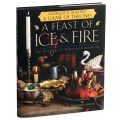
A-Feast-of-Ice-Fire-Official-Game-of-Thrones-CookbookLike the medieval culture on which it is loosely based, the cuisine of Westeros does include gluten-free and plant-based options—enough, certainly, for a solid viewing party spread. Flipping through the contents of both the official and unofficial Game of Thrones cookbooks turns up lots of ideas: dried beans and nuts at the Wall, root cellar apples and veggies in the North, honeycomb from the Vale, leeks and greens from the lush Riverlands, stunning fruit desserts in the Reach, citrus and fiery spices in Dorne, and all of them coming together in the melting pot that is King’s Landing. I think I’ll pass on the fried locusts from across the Narrow Sea.

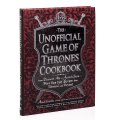
ed95_unofficial_game_of_thrones_cookbookWhat will I be making this Sunday? I’m not hosting the party, so I’ve got some conferring to do with the friend in charge. But I’ve put on my thinking cap (a warm one, since, you know, winter is coming). “Doran’s Favorite Chickpea Paste” sounds an awful lot like hummus, a classic GF-veg staple, and stuffed peppers and dates would please any palate, fantasy or modern-day. Throw in a cheese plate and some GF flatbread and you’ve pretty much got yourself a party. Oh, except for dessert. We’re considering hot-cross buns, which are vaguely medieval and perfect for Easter. There are some great GF recipes out there, and my new kitchen scale is just dying to pledge fealty to a proprietary GF blend. I am also tempted to try these hilarious (spoiler alert!) cake pops, but I’ll probably be too lazy.

Stay tuned and I’ll update you on the final menu sometime next week. In the meantime, know that you can be meat- and gluten-free in Westeros without being options-free. You just…might need to be a peasant. 

For this post, I sourced my medieval food facts from Wikipedia (which in turn sourced its info largely from Melitta Weiss Adamson’s Food in the Middle Ages, Regional Cuisines of Medieval Europe, and Food in Medieval Times). Though to give credit where credit’s really due, I’m pretty sure I heard most of it from my dad first (he blogs about food here). I pulled ideas for Sunday’s menu from the two books I linked to above and also wanted to call out the blog that spawned the official cookbook, Inn at the Crossroads, a must-read for fans of Game of Thrones and sustenance. Finally, I feel compelled here to admit that I have not read the books; I just watch the show. This runs contrary to all my media consumption principles, but those books are thick, and I keep pretty busy writing about gluten.

Are you a Game of Thrones fan? Any favorite foods from the series? Any other shows you’re excited for this season? Do you enjoy viewing parties and cooking themed menus, or do you consider your food restrictions theme enough? Alternatively, what have you got going on for Easter this weekend?

Tagged , , , , , , , , , , , ,
Design a site like this with WordPress.com
Get started