Tag Archives: celiac disease

Is the gluten-free tax break broken?

Tax season is upon us! This year, even the IRS is procrastinating: because of last year’s shutdown, the opening date has shifted to January 31st, although free-filing opens today. But I never submit my tax forms until the very last possible moment, anyway. Instead, I spend every day till the drop-deadline thinking, “I should really do my taxes.”

Some people like to get it over with. Me, I prefer a constant, underlying, slow-burning stress culminating in a miserable, last-minute sprint to the finish line, followed by form letters from the IRS demanding I fix the sloppy errors I made. That way, I can enjoy tax season year-round. (Just another instance of that procrastination problem I’m working on.)

Since the deadline is April 15th, it’s nowhere near time for me to do anything about my taxes, but I’m at least thinking about them.

This year, my mind is on the gluten-free tax deduction (more info on that here). How worthwhile is it to count up my medical (including more expensive food) expenses, figure out if they exceed 7.5% 10% of my adjusted gross annual income, and file that extra piece of paper on the last day possible?

[Edit, 1/25: According to the IRS, it’s actually 10%, not the often-cited 7.5%, which applies only to those who are, or whose spouse is, over 65 years old.]

Since this was my year of diagnosis, I might be in a good place to qualify: My medical expenses included about a billion copays for doctor’s appointments and exams. A billion times $30 definitely exceeds 7.5% 10% of my income.

Plus, though I rarely buy packaged gluten-free food products, I do pay more for certified GF grains, beans, breakfast cereals, etc. I also buy staples with no direct analogue, like my largely unused package of xanthan gum, which are entirely deductible. (For items like sorghum flour, I’m less certain: there’s no direct analogue, but wheat flour is close. Anyone know the deal?)

If my record-keeping last year had been a little more organized than stuffing all of my receipts into my tote bag, allowing the tote bag to get rained on, then throwing out the mass of soggy paper, I could tell you if those extra pennies added up enough.

But I know I’d hit the benchmark if I could add in other hidden costs of a gluten-free diet that the law doesn’t address. For example:

  • The difference between the cheapest beer and the cheapest GF drink choice at every bar. This is always at least $1, and at Housing Works I recently paid $7 for the house white—more than double the price of a $3 PBR. At least it went to a good cause.
  • All the chocolate I’ve had to buy myself when I feel sad about having a disease
  • My smartphone, whose purchase I justified primarily to be able to research foods on the fly (though I use it for way more)
  • Gluten-free restaurants, which are always, always, always more expensive than the restaurants I used to frequent
  • Any of the far-too-generous number of dollars family and friends have laid out to allow me to feel safe eating at their homes
  • The all-new pans, containers, utensils, pantry staples, etc., that I bought in case the old ones were contaminated
  • My time—which is money, if not all that much in my case—spent:
    • Cooking my own meals, even when I really, really want takeout
    • Reading package labels, researching online, and calling manufacturers directly
    • Explaining to people why I can’t eat X, Y, and Z
    • . . . and why I can still eat Q, R, and S
  • Damages for my years spent sick, miserable, and undiagnosed

All that considered, I’d only really be happy paying no taxes at all—a gluten-free free lunch—or, maybe the government could pay me to be gluten-free. After all, improved health makes me a more productive member of society. The eligible write-offs don’t even begin to cover it.

Is that so much to ask? (Throw in the NCGS folks, too, whydoncha.)
Original photo @ Darya Mead | Flickr

Of course, I know everyone has to make purchases they wish they didn’t, spend time doing stuff they’d rather not, and generally speaking lead a life that doesn’t allow for enough pursuit of happiness. Having celiac disease isn’t the worst way to have to do all that, and, without getting too far into politics here, I’m happy enough to pay taxes in theory (in practice, I wonder where they’re all going).

Though I’m not sure it’s entirely “broken,” I probably won’t go for the deduction this year. There’s a good discussion of how worthwhile it is on No Gluten, No Problem, which helped talk me out of it. Even if I dug through my bank and Amazon records for something approaching receipts in the case of an audit and tallied it up, I’m not confident I’d find the gluten-free tax break worth my time. Besides, I don’t pay a lot of taxes anyway. I’ll just do what I do best and think about it instead.

Do you apply for the gluten-free tax deduction? Will you this year? Are you a procrastinator or an early bird? And what hidden costs of gluten-free get on your nerves?
Tagged , , , , , , ,

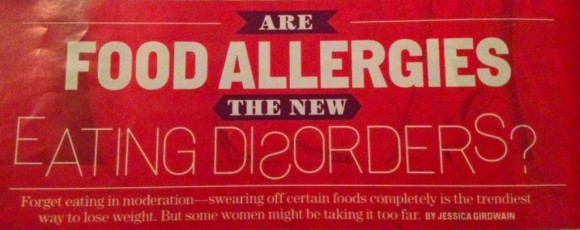
Are Food Allergies the New Eating Disorders? Cosmo tells all.

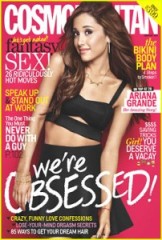
Yesterday, I bought my first (and quite possibly last) copy of Cosmopolitan ever. The February 2014 issue boasts a flashy pink cover, “85 ways to get your dream hair,” and a 4-step “bikini body plan.” Good stuff.

But what really interested me was this:

I’d heard about the article the night before (thanks to Anna Luke, @Gfreegimme3), and I opened to page 182 ready to hate it. 

I wasn’t totally disappointed.

The piece, by freelance health writer Jessica Girdwain, makes the case that some people use allergies as an excuse to eat less, and so control their weight. It urges readers to determine whether they’re truly allergic or intolerant to a food, or in fact struggling with disordered eating.

[Edit: You can now read the entire story online here, so you don’t have to spend the four bucks. No, I don’t know why it’s categorized under “Party Ideas & Tips.”]

The story bugs me in several ways. It:

  1. Features a truly repulsive visual of a lipsticked, nail-painted hottie sensuously devouring what looks like an entire naked pizza crust. It also prints the phrase “eating disorders” in the title with a backwards S and a couple misaligned letters. Like, get it? It’s disordered. Cute!
  2. Muddies the waters about celiac disease: Girdwain calls celiac “an extreme form of gluten intolerance,” then states that “with an intolerance, you may be able to eat dairy, gluten, sugar, or eggs in limited amounts . . . And you may be able to reintroduce the food into your diet in the future.”
        Girdwain and her editors might know that people with celiac can’t eat even small amounts of gluten ever again, but Cosmo’s 78 million readers worldwide may not. The way this article is worded, they still won’t.
        Note: The world’s leading experts on celiac disease now agree that the umbrella term gluten intolerance “carries inherent weaknesses and contradictions” and should be ditched in favor of gluten-related disorders. So let’s start. (I’ll abbreviate it to GRDs for the rest of this post.)
  3. Completely ignores the existence of male eating disorders. Then again, it is a women’s magazine. In its pages, men are merely gods who demand satisfaction by the ritual sacrifice of female dignity.
  4. Appears opposite an ad for Hydroxycut: Really, Cosmo? You’re going to lecture us to avoid restrictive diets, then sell us a weight loss supplement? That’s . . . well, that’s exactly what I’d expect.

Still, the article gets some things right. Girdwain recognizes that food allergies and intolerances are real and are serious. Her primary example is a woman who gets her doctor’s approval to go gluten-free, then spirals into orthorexia (an unhealthy obsession with eating only “healthy” foods).

It’s a realistic story, but the argument it illustrates is guaranteed to get eyerolls from the food allergy and gluten-free community. Many of us struggle to have our needs taken seriously, precisely because we’re perceived as fad dieters or disordered eaters.

There is a connection, though.

Looking into it, I found there are many links between eating disorders and food allergies, intolerances, and GRDs. For example:

  • Celiac disease can be misdiagnosed as an eating disorder.
  • Made-up or perceived allergies can mask or exacerbate an eating disorder.
  • A person with celiac disease can develop an eating disorder.
  • A person with an eating disorder can develop food intolerances.

About 1% of the population has celiac disease, and up to 1 in 13 kids has one or more food allergy. Similarly, data from the National Association of Anorexia Nervosa and Associated Disorders (ANAD) suggests that about 8% of Americans have an eating disorder. With so many people affected by these conditions, there’s bound to be some crossover.

But there’s more than just coincidental crossover.

Run a Google Scholar search on, say, “celiac disease and anorexia,” and you’ll find that the two often go hand in hand. The University of Chicago Celiac Disease Center even includes the disorder on its list of celiac disease symptoms.

The association may be because:

  • Sticking to “food rules” or diets can lead to obsessing over food, restricting intake, and/or binge eating.
  • Associating food with suffering can encourage eating less.
  • Social and familial issues related to health issues can spur an eating disorder.

If you think about it, a gluten-free (or dairy-free, nut-free, soy-free, and so on) diet is disordered eating. It’s highly restrictive; it encourages religious avoidance of minute quantities of certain foods; it brings fear and anxiety to the dinner table; it drives a wedge between you and those with whom you dine. Sure, for us, it’s the healthiest option, but that doesn’t make it entirely healthy.

Someone already “on the spectrum” of restricting and binging could easily slip, once allergies and GRDs (real or fictional) get involved. And (according to the ANAD) 7 to 9% of people who go on any kind of diet eventually develop a partial or full-blown eating disorder. Small wonder, then, that embarking on an ultra-restrictive diet for health reasons might point people down that path.

Getting personal . . .

In my experience, disordered eating and celiac disease are intimately linked. Though I don’t have an eating disorder (and don’t want to co-opt the term), I’ve got my own share of food issues. When I was diagnosed with celiac disease myself, one of my first and nastiest thoughts was, “Yes! A new, valid excuse to refuse food when it’s offered to me. Maybe I’ll lose weight!”

Sure, I didn’t actually need to lose weight, I knew that more people who go gluten-free gain weight than lose it, and I had more important things to think about—like my health, and what to do about my kitchen. But still, I thought it.

I wrote about this more when the topic came up at Gluten Dude almost a year ago (the firebombs thing was a joke), and I’m sure I’ll write about it again. For now, I’ll conclude, with some surprise, that . . .

I agree. With Cosmo. Do you?

Some women (and men) do rely on excuses to avoid food, consciously or unconsciously; and the actual rise in food allergies and GRDs lends the “fakers” more credence. And people with legitimate reasons to avoid foods sometimes take it too far.

Cosmopolitan February 2014 issue

Oh, Cosmo.

To be honest, I find it refreshing that a magazine like Cosmo would include an article warning against restricting foods to lose weight. Of course, the very next spread is an “I Dream of Bikini” workout, and the women pictured in the issue are the very Photoshopped, personally trained waifs we’re all killing ourselves to imitate. But what’s a little hypocrisy among friends?

The article, with all its flaws, spotlights a real issue, albeit an uncomfortable one. I’m interested to see how others in the community respond, and I’d especially love to hear YOUR thoughts.

Have you read the article? What did you think? Do you have thoughts or personal experience you’re comfortable sharing about the GRD/allergy and eating disorder connection, or the blurry lines between them?

Sources (I accessed the full texts through my alumni network, so you may just have to trust me):Anorexia Nervosa and Celiac Disease: Two Case Reports,” “Eating disorders and celiac disease: a case report,” “Coeliac disease and eating disorders – forgotten comorbidities?

Other reading on this topic: “Eating Disorder or Celiac Disease?…Or Both?” on About.com, Carrots and (Candy) Stick‘s response to the Cosmo articleLiving Without‘s 2012 article, “Celiac Disease and Eating Disorders”

Thanks for reading! If you stuck through to the end, double thanks! When me and my dream hair and bikini bod are lounging on the beach this summer, I’ll think of you.

Tagged , , , , , , , , , , ,

Check it twice: A list of gifts NOT to buy for the gluten-free folks you love this Christmas

It’s December! Snow is falling, friends are calling, and ’tis the season for every blogging boy and girl to post their personal Christmas wish lists, disguised as suggestions of what totally unrelated people might want to buy for some other person who happens to be extremely similar to them.

Look around, and you’ll see gift suggestions for fitness freaks (compiled by fitness freaks), tech geeks (compiled by tech geeks), book lovers (compiled by book lovers), home cooks (compiled by home cooks), and the one who has everything (compiled by people who wish they had everything).

And, of course, you’ll see them for the gluten-free, by the gluten-free. Here are just a few sites with intriguing lists of these-are-not-hints for gluten-free kids like me:

I thought about doing a wish list myself, but what good is wrapping paper if you already know what’s on the inside? I’d rather be surprised.

Still, I don’t want to leave my loved ones or yours without any guidance at all. So, to supplement all those other lists itemizing stuff I certainly wouldn’t want anyone to buy for me, I’ve made a list of what NOT to buy for that special celiac someone, at least if you mean to avoid an awkward, awkward Christmas. (Never fear; if you already bought one, there’s still time to make an exchange.)

1. Anything that contains gluten. No, not even as a joke.

angry cat in Santa hat

Santa Cat would find that very naughty.
Photo © John | Flickr

2. While you’re at it, you might want to avoid any kind of food at all. To do it right, you’d have to really get gluten-free, do your research, and commit to heart all of the quirky criteria your personal celiac no doubt has (no oats, no dairy, certified by the NFCA is good but certified by GIG is not, low-FODMAP, feeling worried about arsenic in rice, no GMOs, xanthan gum is the devil, etc., etc.). Otherwise, that gift box will probably be going to the recipient’s coworkers in 2014. And then no one will be happy.

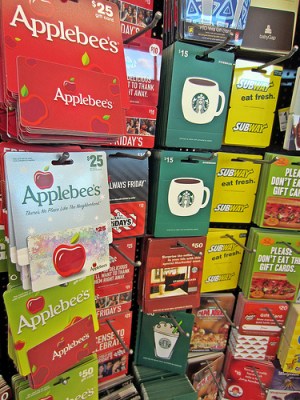
3. Restaurant gift cards—unless you know the person has eaten there recently and felt 100 percent safe and satisfied (or that a LOT of other gluten-free people have). Since even those of us in metro areas have approximately two restaurants like that in our lives, this one’s a toughie.

The lamest possible gift...whether gluten-free or not. Photo © 401(K) 2012 | Flickr

The lamest gift of all…gluten-free or not.
Photo © 401(K) 2012 | Flickr

4. Wheat Belly, by William Davis. Yes, your GF pal has heard of it. But he/she almost certainly considers it a load of reindeer manure.

Wheat Belly cover

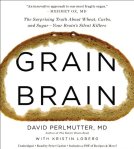
5. Grain Brain, by David Perlmutter. Ditto.

Grain Brain cover

6. Bread Butt, by…okay, no one has written this yet. But when they inevitably do, let Amazon keep it.

7. Sketchy supplements, like GlutenEase or Glutenzyme. Though enzymes are being developed (!) that may be able to help in cases of accidental minute exposure to gluten (similar to Lactaid), they’re not there yet, and what’s on the market now doesn’t work. If you want to stuff that stocking with a placebo, sugar pills would be cheaper—and tastier too.

placebo effect

Or, you could just suggest they think about their health some more. That’ll make for some friendly dinner conversation.
Photo © Carmen Rodriguez | Flickr

8. I know I already said “no food,” but there’s one thing I’d like to call out to you especially—and it is with great sadness that I do. Lindor truffles, as I learned recently, contain barley malt, and no Lindt chocolate is guaranteed gluten-free. If you give these, you just might get tears.

angry Santa girl with candy cane

Better watch out, if you don’t want to come face to face with this in a dark corner under the mistletoe.
Photo © Nicola Albertini | Flickr

Want to help prevent a blue, blue Christmas for celiac folks like you and me? Then share: what else would you, as a gluten-free person, not want to find under the tree? (And, if you want to make it easy, share a thing or two that would make you merry.)

Want the elves to package up more posts like this for you? Follow me via Twitter, Facebook, or email, and you can have Christmas two or three days a week, every week.

Tagged , , , , , , , , ,

Is Kosher the Next Gluten-Free?

If your response to this post title was, “WTF, Molly? That makes no sense,” then your head is about where mine was when I read this headline on Forbes.com: “Is Kosher the Next Big Food Trend?”

Big trend? Kosher? I didn’t get it. Yes, some people of Jewish heritage and/or faith keep kosher, but by no means all (the majority of my Jewish acquaintances, for example, do not). How could something so very specific to the needs of a relatively small segment of the population become a big food trend?, I wondered.

Then the writer mentioned gluten. Oh, I thought. Right.

“Gluten-free,” arguably helpful only to the 1-ish percent of the population with celiac disease (and to others who may be gluten sensitive), has nonetheless managed to become a “big food trend” because American consumers are so dumb that you can put anything on a package label and they’ll assume it means “healthy.”

Kosher may be enjoying the same halo, bolstered by the sense that something “certified” must be more rigorously inspected and therefore purer than other products—regardless of what it’s actually being inspected for. (In the case of kosher, for pork, “unclean” animal meat, the mixture of milk and meat, etc.)

And gluten-free, too! Photo © marsmettnn tallahassee | Flickr

And gluten-free, too!
Photo © marsmettnn tallahassee | Flickr

Now, kosher and gluten-free aren’t totally dissimilar. One of my coworkers keeps kosher, and for an office potluck, she brought in a zucchini bread, with a clean kosher plastic knife that she asked everyone to use—“because otherwise I won’t be able to eat it.” I’d brought in a soup, which I dumped into a presumably gluten-contaminated pot to heat on the stove—except for the single serving I’d reserved in a clean gluten-free container to microwave for myself. Both she and I were too trendy to eat what the others had brought.

Additionally, for some people who don’t keep kosher, there are health-related advantages to choosing kosher foods. Vegetarians can be confident there’s no animal-derived rennet in kosher cheese, just as those with wheat allergies can be [fairly] confident there’s none of that in gluten-free foods. People who enjoy putting arbitrary restrictions on their food intake in hopes of losing weight are just as well off choosing kosher foods as gluten-free ones.

Plus, foods that are “Kosher for Passover” must be grain-free, and anything grain-free is automatically gluten-free (though the converse is not necessarily true). Many kosher-certified products are therefore certified GF, too—for example, such health foods as Katz cinnamon rugelach and chocolate-frosted donuts, and Glutino chocolate vanilla crème sandwich cookies.

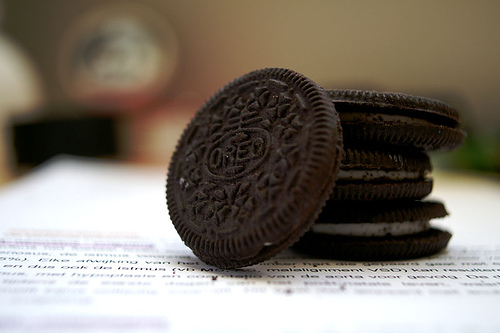
On the subject of sandwich cookies, let’s consider the Oreo. A fine (though not gluten-free) occasional treat, at 160 calories in a serving of three (if you can stop at three), Oreos are predominantly composed of refined flour, oil, and high-fructose corn syrup, and offer little nutritional value. A health food, the Oreo is not.

But what it is, is kosher. In “probably the most expensive conversion of a company from non-kosher to kosher,” according to Prof. Joe Regenstein, Nabisco converted its cookie formula to cut out lard (derived from pork), and blowtorched all of its factory equipment to remove remaining traces on the lines (in the process destroying, and later replacing, some expensive equipment).

All that just to beat out Hydrox, a competing—kosher—brand that existed before Oreos. When Oreos cut out the lard, they gained enough new customers to cut Hydrox out of the sandwich cookie market. Today, many of us have never heard of Hydrox, and for good reason: it no longer exists.

The triumphant victor Photo © Stoffel Van Eeckhoudt | Flickr

The triumphant victor
Photo © Stoffel Van Eeckhoudt | Flickr

However, the fact that at least three brands of chocolate-and-crème sandwich cookies—not to mention marshmallows, hot dogs, soft drinks, and more—have been able to claim kosher certification exists as powerful evidence that “kosher” doesn’t mean “healthy.”

Similarly, though I love Katz and Glutino, I know that their gluten-free (and kosher) desserts are treats, not health foods. You know that, too, I’d wager. But does anyone want to place bets on how few people in the US and worldwide do?

The idea of kosher as the next health trend has been bubbling up for at least a few years. In 2010, the New York Times published “More People Choosing Kosher for Health,” and in 2012, Dr. Weil weighed in on the question “Are kosher foods better for you?” This puts the trend just a couple years behind gluten, which was getting NYT attention in 2007, and Dr. Weil’s in 2010. If the trajectory continues, then by sometime next year, one in three Americans just might be “trying to go kosher.”

Will that happen? To make a probably not kosher joke…dear G-d, I hope not.

I don't think this needs a caption, do you? Photo © ceetap | Flickr

I don’t think this needs a caption, do you?
Photo © ceetap | Flickr

What do you think? Is kosher poised to become the next big thing? Are there health benefits to it that I’m missing? What package labels make you think a food is healthier?

Tagged , , , , , , , , , , ,
Design a site like this with WordPress.com
Get started