
Category Archives: Breadcrumbs in the wilderness

Help me write a letter to my doctor

Last week (erm, two posts ago…gosh, I’ve been lazy) I asked why doctors can’t just talk to each other. I wondered if all my docs could have put their heads together and figured me out faster. The consensus was “maybe, maybe not.”
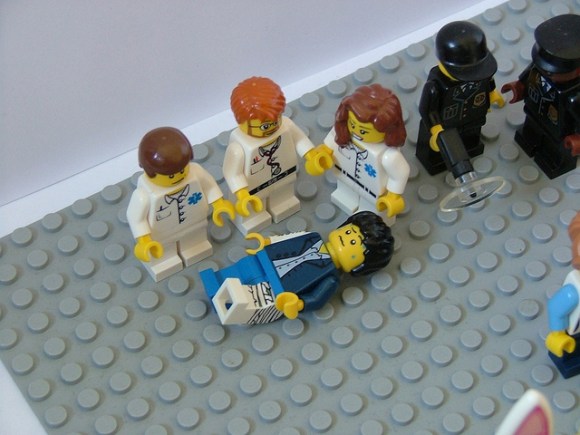
Photo © Ben Weston | Flickr

Even though celiac disease is associated with a huge range of symptoms affecting virtually every system and function of the body, with implications going well beyond the gastrointestinal, it’s GI doctors who are overwhelmingly responsible for diagnosing it. Other doctors are less likely to be trained in recognizing it, and apparently also less likely to care. (Back in February, Jess of The Patient Celiac posted a selection of anonymous comments on an online doctors forum that included this gem: “Ugh. Is there any disease more boring and worthy of turfing to the GI guys than Celiac Sprue?”)

So although in an ideal world, any of my doctors could have diagnosed me separately or in collaboration (or a supercomputer could have), in the real world it was pretty much down to the one who specialized in intestines to diagnose me.

But she didn’t.

I saw a gastrointestinal doctor for the first time back in December/January of 2011 after half a year of symptoms (my insurance made it hard to see a doctor earlier, since I was in college out of state). In that half a year, I’d had an emergency room visit, I’d tried a strict low-FODMAP diet with no results (besides an initial placebo high that wore off after a week), and I’d worried a LOT.

The GI doc did a colonoscopy but—inexplicably—not an endoscopy or at the very least a blood test for celiac disease. She wasn’t interested in talking about food (turfing it to the dietitian guys, I suppose, though she didn’t set me up with one), and she sent me on my way with OTC meds and all but a pat on the head.

Since I first got my positive bloodwork results, even before I had a fully confirmed diagnosis of celiac disease, I’ve been toying with the idea of calling or writing to this doctor. Now that it’s nearly May—celiac awareness month, as you may be (heh) aware—it seems like a good time to follow through.

What I want to accomplish here is:

1) Tell her my story
2) Understand why she didn’t test me for celiac disease (or, if she did without my being aware, why she never contacted me with the results)
3) Let her know, if she doesn’t, that my particular symptoms are commonly associated with celiac disease
4) Encourage her to test for celiac disease before diagnosing IBS in the future.

What I don’t want to do is:

1) Come off as whiny
2) Come off as condescending
3) Offend her sense of her own expertise
4) Be immediately dismissed
5) Threaten a lawsuit.

Unfortunately, I’m a whiny, condescending, offensive, easily dismissed person prone to making accidental threats. So I need your help!

Have you ever written this kind of letter? Whether or not you have, do you have any tips for me? Any specific things I should say or not say?

Is it better to do this in writing or over the phone (in your opinion or experience)?

Do you feel this kind of patient-to-doctor education is possible and worthwhile? What are other ways to go about it?


Tagged , , , , , , , , ,

Why don’t doctors just talk to each other?

You know that old conversation starter/essay prompt, “If you had to pick five people, famous or not, dead or alive, real or imaginary, to invite to a dinner party, who would you choose?”

There are variations with different numbers and types of people, but the question’s basic thrust, I think, always comes down to a mix of “Who do you most want to talk to?” and “Who do you most want to talk to each other?” In other words, what combination of people in all the world and all of history do you feel would produce the most interesting dialogue?

This question was an option for my college admissions essay. I didn’t choose it, probably because I feared my taste in famous and historical companions would not pass muster. I’m still not sure it would, even after my four years of cultural grooming.

But lately I’ve been thinking about it again, not so much in terms of a fantastic philosophical discussion I could arrange, but in terms of a conversation I could trigger that would have immense utility for me personally. What if, a couple years ago, I’d thrown a dinner party for all of my different doctors—my old general practitioner, the emergency room doc I saw one time, the gastroenterologist who prescribed OTC medication, the ob-gyn, the dentist—and proposed the conversation starter “Diagnose Molly”? (Personal health makes for great dinner conversation.)

Could they have done it? Could they have laid out all my different symptoms on the table and connected the dots, instead of each focusing myopically on a different piece of my health? Or would they refuse to talk to each other, kick each other under the table, pick at their meals? Would the GP look down on the GI doc and the emergency room doc fixate on his beeper and the dentist drift into fantasies of his future yacht?

Maybe they’d manage it if I threw a celiac disease expert in there. Or gave them access to WebMD.

Wouldn’t it be nice, though, if instead of a splintered, segmented health care system, we had doctors who spoke to one another? Of course, doctors have so many other patients to deal with that they would never have time for a little conference focused just on me.

But what if they . . . you know . . . shared their records with one another in an organized way, using the advanced technology we have available for preserving and sharing information? Might that not have helped? Might the pieces not have come together faster?

Is that such a fantasy? Is it science fiction? If you ask me, it shouldn’t be.

I’m off to Washington, DC, today to visit my brother and see some cherry blossoms. Have a nice weekend, and tell me who you’d invite to a dinner party if you could pick any five people.

Tagged , , , , , , , ,

April fools

Sorry, y’all, I suck.

I was kidding about Dunkin Donuts going g-free by 2020. At least, kidding about having heard it from Dunkin Donuts. Of course, product development and availability is moving so fast across the food industry that who knows! So far as I know, Dunkin only has the two gluten-free options right now with no definite plans to expand the locations that offer them. If anyone’s super disappointed, I hope I can buy you a GF blueberry muffin one day to make up for it.

By the way, the bit about my weird donut preferences was true and obviously worth a read. But more importantly, there were some very thoughtful comments about what Dunkin Donuts and other restaurants should do to gain the confidence of their food-intolerant or allergic customers, so no need to skip the post!

“Sprue” stories only from now on, promise.

Photo © MarikaSofika | Flickr

Photo © MarikaSofika | Flickr

For the record

You know when keeping a food log sucks? When you get to the end of a day and realize it looks like this:

Breakfast: Sugary cereal

Snack: ~1/3 jar of Dark Chocolate Dreams peanut butter

Lunch: Half a bag of tortilla chips with salsa and hummus

Snack #2: Gluten-free cookies

Dinner: Frozen premade Indian dinner, peanut brittle

Exercise: Skipped


You know when it sucks worse? When you’ve had a week of days that look like this:

Breakfast: Unsweetened whole-grain hot cereal with flax and almond milk

Lunch: Sweet potatoes, pinto beans, carrot sticks

Snacks: Reasonable portions of nuts, fruit and vegetables

Dinner: Tempeh, apple, and onion stir fry with brown rice and spinach

Exercise: Lots of walking, plus 45 minutes on the elliptical

. . . but you still feel like crap.

Photo © Ben Haley | Flickr

Photo © Ben Haley | Flickr

Amirite? I know my paleo friends are just waiting to pounce on that second entry, much as their ancestors descended upon prey in the savanna. There are at least as many different definitions of an ideal diet as there are calories in a third of a jar of peanut butter. My own sense that a whole-foods, plant-based diet should make me feel healthy is shored up largely by dogma and selective reading. Still, at the end of most days, I feel I’ve made pretty good food choices. But does it make a difference? My answer is in black (or blue, depending on pen color) and white.

When other people go on and on about how great their unprocessed veg*n diets make them feel, I often struggle with the urge to hurl butternut squash at their heads. I know intestinal healing comes first, and I’m sure an overall healthy diet is probably working invisible heart-protective magic, yadda yadda, but I can’t help but wonder: What’s the point of eating well if an unhealthy gluten-free diet and a healthy gluten-free diet leave me feeling exactly the same? For that matter, what’s the point of eating a healthy or unhealthy gluten-free diet if I feel worse on average than I felt when I was eating gluten? Why bother doing it right if I’ll still feel wrong?

When I start asking myself this kind of question, that’s when I know it’s time to call in the big dogma. Six months to two years to feel better on a gluten-free diet, I remind myself, mantralike.

Six months to two years. That’s a lot of days worth of food logs. Might as well make them good ones . . . well, most of them, anyway.

Photo © Tyler Dawson | Flickr

Photo © Tyler Dawson | Flickr

Tagged , , , , , , , , , , , ,
Design a site like this with WordPress.com
Get started